Prof. Dr. Jörg Libuda
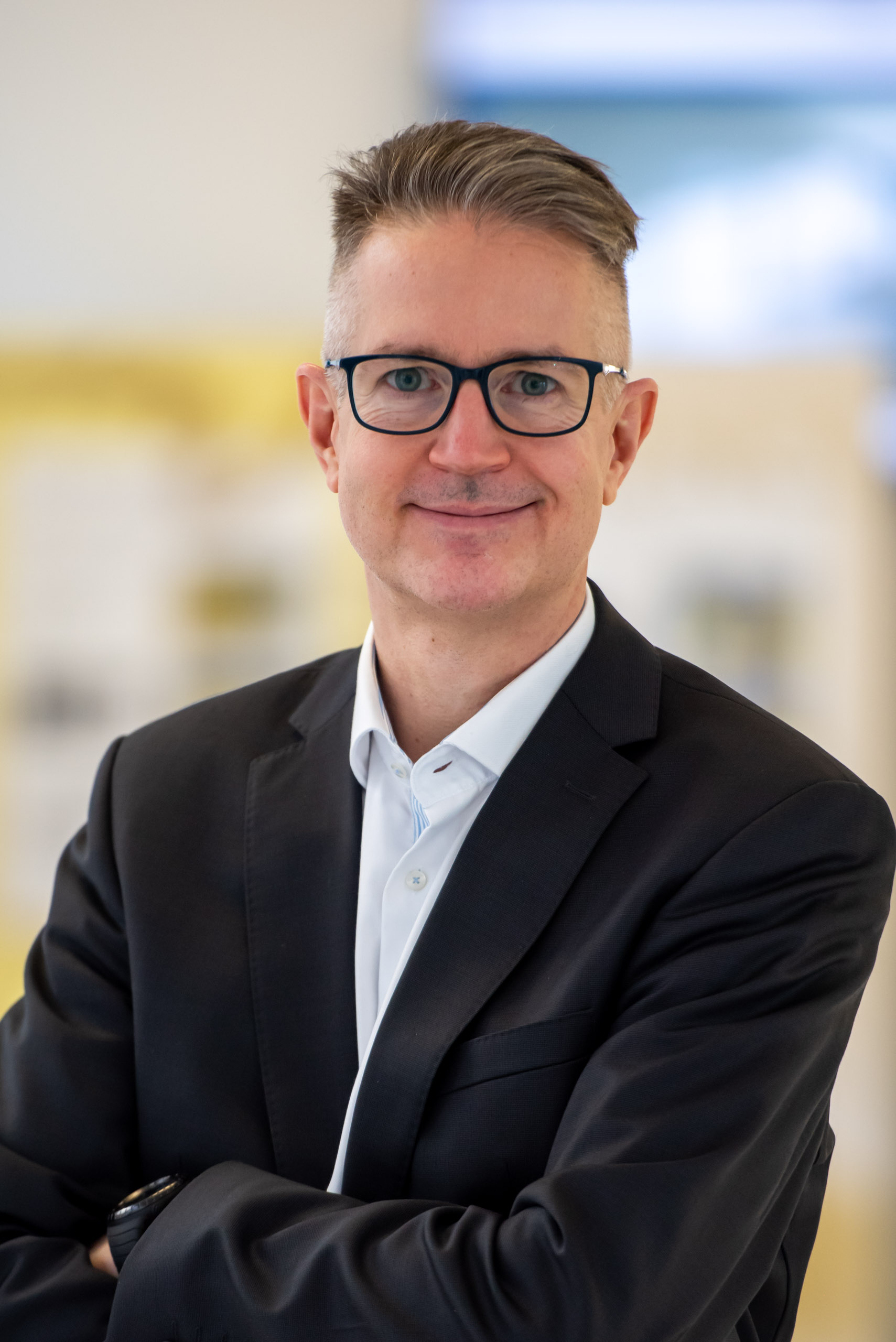
Prof. Dr. Jörg Libuda
Address
Contact
Consultation Hours
By appointment via email joerg.libuda@fau.de
Education and Scientific Career
| 1968 | born in Bochum, Germany | |
| 1988 – 1993 | Studies of Chemistry at the Ruhr-Universtät Bochum, Germany | |
| 1993 | Diploma in Chemistry at the Ruhr-Universität-Bochum (‘with distinction’) | |
| 1996 | PhD at the Ruhr-Universität-Bochum (‘with distinction’) with Prof. H.-J. Freund | |
| 1997 | Member and Grant of the Studienstiftung des Deutschen Volkes | |
| 1996 – 1998 | Workgroup leader at the Fritz-Haber-Institut der MPG (Berlin) | |
| 1996 | Otto-Hahn-Medal 1996 of the Max-Planck-Society. | |
| 1998 – 1999 | Postdoctoral fellow at Princeton University, Princeton, USA with Prof. G. Scoles. | |
| 1999 – 2005 | Workgroup leader at the Fritz-Haber-Institut der MPG (Berlin) | |
| 2003 – 2005 | Coordinator of the International Max Planck Research School ‘Complex Surfaces in Materials Science’, Berlin (FHI Berlin, FU Berlin, HU Berlin). | |
| 2003 | Habilitation in Physical Chemistry, Humboldt-Universität zu Berlin. | |
| 2005 – 2019 | Professor for Physical Chemistry, Friedrich-Alexander-Universität Erlangen-Nürnberg | |
| Since 2019 | Full Professor (W3), Chair of Interface Research and Catalysis, Erlangen Center for Interface Research and Catalysis | |
Professional Service in Academia and Science
| Since 2007 | Interdisciplinary Center for Interface Controlled Processes, Chair of Exceutive Board | |
| 2008 – 2019 | Erlangen Catalysis Resource Center, Member of Executive Board | |
| Since 2008 | Excellence Cluster Engineering of Advanced Materials, Member and Project Leader | |
| Since 2010 | Graduate School Molecular Science, Member | |
| 2006 – 2010 | COST Action D-41 “Oxide Surfaces and Interfaces”, Workgroup Leader, german representative | |
| Guest Editor Chemical Society Reviews, Special Issue for Nobel Laureate Gerhard Ertl; Catalysis Letters, Topics in Catalysis, Editorial Advisary Board; Surface Science, Special Issue Functional Molecular Structures on Complex Oxide Surfaces | ||
| 2009 – 2010 | Local Chair Erlangen-Nürnberg of Gesellschaft Deutscher Chemiker | |
| Since 2012 | COST Action CM1104 “Reducible Oxides, Structure and Functions”, Workgroup Leader, MC | |
| 2013 – 2017 | Research Unit FOR 1878/1 “funCOS – Functional Molecular Structures on Complex Oxide Surfaces”, Spokesman and Project Leader | |
| 2017 – 2022 | Research Unit FOR 1878/2 “funCOS – Functional Molecular Structures on Complex Oxide Surfaces”, Spokesman and Project Leader | |
| Since 2019 | Erlangen Center for Interface Research and Catalysis, Head of Executive Board | |
| 2021 – 2025 | Collaborative Research Center 1452 Catalysis at Liquid Interfaces, vice spokesperson | |
| Since 2022 | Fellow of the European Academy of Sciences (EURASC) | |
| Since 2022 | Swiss National Science Foundation (SNSF), member of evaluation panel | |
| Since 2023 | Faculty of Science, FAU, member of faculty council | |
| Since 2023 | Research Unit FOR 5499 “FOR MOST – Molecular Solar Energy Management – Chemistry of MOST Systems”, vice spokesperson | |
| Since 2023 | Member of the Academia Europaea | |
| Since 2024 | Elected member of DFG Review Board (Fachkollegium, Review Board 3.12, Chemical Solid State and Surface Research) | |
| Since 2024 | Member of the Research Advisory Board (Forschungsbeirat) of the Fonds der Chemischen Industrie (FCI) | |
| Since 2024 | Member of FWO Review College (Research Foundation – Flanders) | |
| Since 2024 | Vertrauensdozent (liaison lecturer) der Deutschen Bunsengesellschaft für Physikalische Chemie | |
| Since 2024 | FAU Competence Center Engineering of Advanced Materials, Board of Directors | |
| Since 2025 | Elected member of Executive Committee, American Vacuum Society, Surface Science Division | |
| Since 2025 | Collaborative Research Center 1719 ChemPrint, member of board | |
Curriculum Vitae
Jörg Libuda studied chemistry at Ruhr-Universität Bochum, received his diploma in 1993 and his doctorate degree in 1996, both with “summa cum laude”, in the group of Prof. Hans-Joachim Freund. Thereafter, he accepted the position of a group leader at the Fritz-Haber-Institute of the Max-Planck-Society (Berlin). He held a grant of the Studienstiftung des Deutschen Volkes and was awarded the Otto-Hahn-Medal of the Max-Planck-Society. From 1998 to 1999, he worked as a Postdoctoral Scientist at Princeton University (New Jersey, USA) with Prof. Giacinto Scoles, before returning to the Fritz-Haber-Institute. From 2003 to 2005, he coordinated the International Max Planck Research School “Complex Surfaces in Materials Science” (Fritz-Haber-Institute, Freie Universität Berlin, Technische Universität Berlin, Humboldt Universität zu Berlin) and received his habilitation in 2003 from the Humboldt-Universität. From 2005 to 2019, he was Professor of Physical Chemistry at the Friedrich-Alexander-Universität Erlangen-Nürnberg. Since 2019, he holds a full professorship (W3) for Interface Research and Catalysis at the Erlangen Center for Interface Research and Catalysis.
At FAU, Jörg Libuda is chairman of the Interdisciplinary Center Interface-Controlled Processes (ICICP), head of the executive board of the Erlangen Center for Interface Research and Catalysis (ECRC) and member of the Excellence Cluster “Engineering of Advanced Materials” (EAM). From 2013 to 2022, he was spokesperson of the DFG Research Unit FOR 1878 “Functional Molecular Structures at Complex Oxide Surfaces”. Since 2021, he is vice spokesperson of the DFG Collaborative Research Center 1452 “Catalysis at Liquid Interfaces” and since 2023 he is vice spokesperson of the DFG Research Unit FOR 5499 “FOR MOST – Molecular Solar Energy Management – Chemistry of MOST Systems” . At the international level, he coordinated workgroups of the European COST Actions D-41 “Oxide Surfaces and Interfaces” and CM1104 “Reducible Oxides, Structure and Functions”. He was guest editor and is member of the editorial advisory board of several international journals, serves as a referee for the most of the top-ranked journals in the field and various research organizations including the DFG, SNSF, Humboldt Foundation, EU, ERC, DAAD, Studienstiftung des Deutschen Volkes and other various national organizations and (co)organized more than 10 international conferences. Since 2022, he is elected fellow of the European Academy of Sciences (EURASC) and in 2023 he became Member of the Academia Europea. Since 2024, he became a elected member of DFG Review Board (Fachkollegium, Review Board 3.12, Chemical Solid State and Surface Research), a member of the Research Advisory Board (Forschungsbeirat) of the Fonds der Chemischen Industrie (FCI), the member of FWO Review College (Research Foundation – Flanders) and, Vertrauensdozent (liaison lecturer) der Deutschen Bunsengesellschaft für Physikalische Chemie.
Research Interests
The group’s activities focus at fundamental studies of functional interfaces and nanomaterials, with a special focus on new materials in the field of catalysis, electrocatalysis, energy technology and conversion, and nanotechnology. The scientific mission of the Libuda Group aims at the development and application of new model systems and novel in-situ methods that bridge fundamental studies in ideal environments and applied research under true operation conditions. The group develops and explores nanostructured model interfaces, starting from a surface science approach. Chemical and physical functionalities of these complex, yet atomically-controlled model interfaces are investigated from ideal ultrahigh vacuum conditions to realistic environments, i.e. in the presence of reactive high pressure gas phases, liquid phases or at the electrified interface. The scope of methods comprises a broad spectrum of surface science techniques, molecular beam methods, reactor studies, time-resolved and operando spectroscopies, electrochemical and spectro-electrochemical in-situ methods, and photochemical in-situ methods, both in the laboratory and at various synchrotron radiation sources (BESSY II, Elettra, MAX IV, DESY, ESRF).The scope of model interfaces comprises a broad spectrum of material classes including metal/oxide systems, nanostructured oxides, alloys and nanoalloys, ionic liquid films, molecular photoswitches, functional organic films and oxide/organic hybrid interfaces. With this model approach, the group aims at providing a well-founded mechanistic understanding of chemical processes at complex functional interfaces, for applications in heterogeneous catalysis, electrocatalysis, energy storage and conversion, hydrogen storage, photoelectrochemistry, molecular electronics, and nanomaterials synthesis, aiming to overcome the gaps between fundamental and applied research on interface-controlled materials.
Publications and bibliometric information




For full publications please go to Publications